Picture this: cruising down the highway, the wind in your hair, and peace of mind knowing that the best auto insurance company has your back. In a world where uncertainties are just around the corner, choosing the right auto insurance provider can be the difference between a smooth ride and a bumpy road. But with a plethora of options, which ones truly stand out?
Welcome to the ultimate guide where we unravel the giants of the auto insurance industry in the USA. We’re diving deep into the realm of protection, financial prowess, and customer satisfaction. Whether you’re a seasoned driver or a newbie hitting the roads, this guide will steer you towards making informed and confident decisions.
Overview of the Largest Auto Insurance Companies in the USA
In the bustling world of auto insurance, a few giants stand tall, steering the industry with their expansive reach and robust service offerings. These companies not only protect millions of drivers but also set benchmarks in customer service and innovation.
Their dominance is a testament to their ability to adapt, evolve, and meet the ever-changing demands of the modern driver.
Leading Players in the Auto Insurance Industry
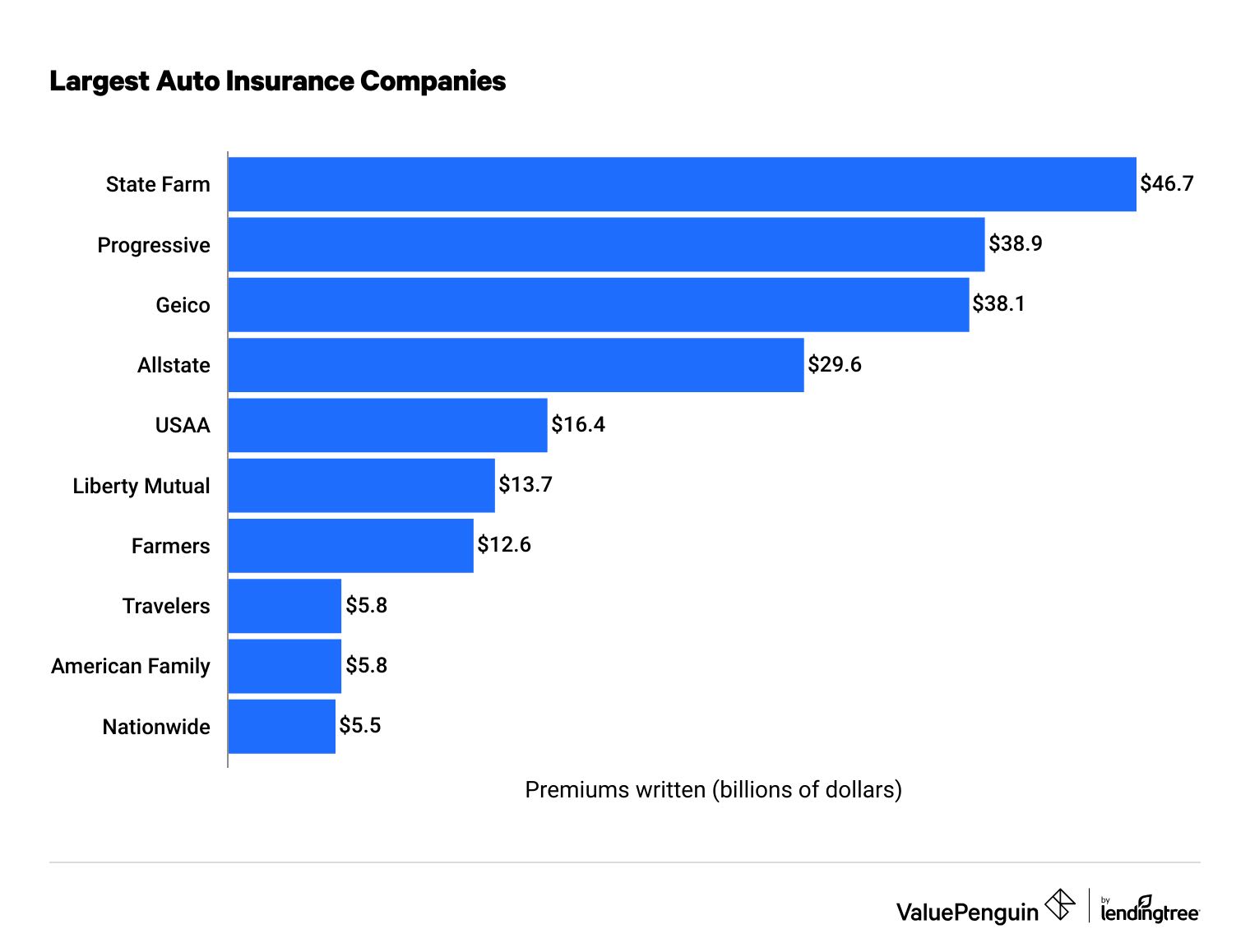
When it comes to auto insurance in the United States, a handful of companies lead the pack in terms of market presence and reliability. These industry stalwarts not only boast widespread recognition but also command significant market shares:
- State Farm
- GEICO
- Progressive
- Allstate
- USAA
Representing a substantial portion of the market, these companies offer comprehensive coverage options, adapted to the diverse needs of American drivers. But what exactly makes them the titans of the industry?
Deciphering Market Share in the Auto Insurance Sector
Market share is a critical indicator of a company’s influence and reach in the auto insurance arena. It reflects the proportion of the industry’s total premiums that a company earns. For instance, State Farm often leads with a commanding market share, followed closely by GEICO and Progressive. With such dominance, these companies hold the power to influence trends and pricing within the sector.
| Company | Market Share (%) |
|---|---|
| State Farm | 16.2 |
| GEICO | 14.1 |
| Progressive | 12.2 |
| Allstate | 9.8 |
| USAA | 6.1 |
Understanding these figures is crucial for consumers and competitors alike, as they navigate the complex landscape of auto insurance.
Determining the Magnitude of an Insurance Company
The size of an auto insurance company can be assessed through various lenses. Primarily, it is based on total premiums written—the overall revenue from issued policies. However, other factors, such as the number of policies in force, financial stability, and customer satisfaction ratings, also play a significant role. These metrics provide a comprehensive view of a company’s ability to deliver on its promises and maintain customer trust.
“In the competitive world of auto insurance, size matters—but so do innovation and customer care.”
As the industry evolves, these companies continue to innovate, ensuring they remain at the forefront of providing not just insurance, but peace of mind to millions.
Financial Performance and Stability
Understanding the financial performance and stability of auto insurance companies is crucial for both investors and policyholders. The stability of a company can significantly influence customer trust and investment security.
Financial stability in the insurance industry is determined by various factors, including the company’s assets, revenue, and market share. These elements not only reflect the company’s current standing but also its potential for growth and resilience in times of economic uncertainty.
Key Financial Indicators of Auto Insurance Giants
When evaluating the financial stability of America’s largest auto insurance companies, certain indicators are paramount. These include assets, revenue, and market share. Below is a detailed comparison of these key players in the industry:
| Company Name | Assets (in billions) | Revenue (in billions) | Market Share (%) |
|---|---|---|---|
| State Farm | $291 | $79 | 16.2 |
| GEICO | $32 | $38 | 14.1 |
| Progressive | $64 | $39 | 12.3 |
| Allstate | $130 | $44 | 9.7 |
| USAA | $40 | $35 | 6.0 |
Factors Contributing to Financial Strength
A company’s financial strength in the auto insurance sector is often influenced by several critical factors. These include:
- Underwriting Performance: A strong underwriting performance indicates effective risk management, which directly affects profitability.
- Investment Income: Insurers often invest premium income, and the returns on these investments can significantly bolster financial health.
- Operational Efficiency: Companies that manage their operational costs effectively tend to maintain better profit margins.
- Capital Adequacy: Having adequate capital reserves ensures that a company can meet its policyholder obligations even in challenging times.
- Market Adaptability: The ability to adapt to market changes and consumer needs is crucial for maintaining market share and growth.
Financial stability is not just about current performance but the potential to remain robust and trustworthy in an ever-evolving market landscape.
Services and Coverage Offered
As the auto insurance landscape in the USA is vast and varied, the largest companies provide a diverse range of services and coverage options to meet the unique needs of their customers. Understanding these offerings can empower you to choose the policy that best fits your lifestyle and driving habits.
From comprehensive coverage to specialized services, these top insurers craft policies that not only ensure protection but also peace of mind. Let’s delve into the unique offerings that set these companies apart in a competitive market.
Distinctive Coverage and Services by Leading Insurers
Here’s a glimpse into the distinct services and coverage options offered by some of the largest auto insurance companies in the USA:
-
State Farm
- Liability Coverage: Protects you against financial loss if you are found legally responsible for a car accident.
- Collision and Comprehensive Coverage: Pays for damage to your vehicle resulting from a collision, theft, or natural disasters.
- Emergency Road Service: Provides 24/7 roadside assistance for breakdowns, flat tires, and lockouts.
- Rideshare Driver Coverage: Extends your policy to cover you while driving with rideshare companies like Uber or Lyft.
-
Geico
- Mechanical Breakdown Insurance: Covers parts and systems not typically included in standard policies.
- Personal Injury Protection: Helps cover medical expenses for you and your passengers, regardless of who caused the accident.
- Accident Forgiveness: Your rates won’t increase as a result of your first at-fault accident.
- Multi-Policy Discount: Save when you bundle auto insurance with other types of insurance like home or renters.
-
Progressive
- Snapshot Program: A usage-based insurance program that can reward safe driving habits with discounts.
- Custom Parts and Equipment Value: Covers aftermarket parts that are not originally installed by the manufacturer.
- Loan/Lease Payoff: Also known as gap insurance, this option helps pay off your loan if your car is totaled.
- Pet Injury Coverage: Included in collision coverage, it helps pay for veterinary bills if your pet is injured in an accident.
-
Allstate
- New Car Replacement: If your new car is totaled, Allstate will replace it with a new car of the same make and model.
- Deductible Rewards: Earn $100 off your deductible the day you sign up and then $100 each year you go without an accident, up to $500 total.
- Safe Driving Bonus: Get a check in the mail every six months you don’t have an accident.
- Claim Satisfaction Guarantee: Allstate will credit your premium if you’re not happy with your claim experience.
Choosing the right auto insurance coverage can make all the difference when life throws a curve. These services are designed to provide both protection and peace of mind, ensuring you’re covered for the unexpected.
Customer Satisfaction and Reviews
In the competitive landscape of auto insurance, customer satisfaction stands as a pivotal element that can make or break a company’s reputation. With a multitude of choices available, understanding the levels of satisfaction provided by the largest players in the market can guide potential customers in making informed decisions.
Customer satisfaction is typically gauged through ratings and reviews, which reflect the experiences of policyholders. These evaluations often highlight the efficiency of claims processing, the accessibility of customer support, and the overall value offered by the insurance policy. The major auto insurance companies in the USA are keenly aware that maintaining high satisfaction levels is essential for customer retention and brand loyalty.
Insights into Customer Service Practices
Leading insurance providers have implemented a variety of customer service practices aimed at enhancing satisfaction. Progressive, for example, offers a 24/7 virtual assistant to handle basic inquiries, ensuring customers receive prompt support at any time. State Farm goes a step further by offering personalized service through local agents who are familiar with their clients’ specific needs, fostering a sense of trust and community.
Geico is known for its swift and efficient claims processing, a factor that significantly boosts satisfaction among policyholders. Furthermore, the use of intuitive mobile apps by companies like Allstate allows customers to manage policies, file claims, and receive roadside assistance seamlessly, all contributing to a more positive customer experience.
| Company | Average Rating | Notable Feedback |
|---|---|---|
| Progressive | 4.5/5 |
|
| State Farm | 4.7/5 |
|
| Geico | 4.6/5 |
|
| Allstate | 4.4/5 |
|
Competitive Advantages and Innovations
In the fast-paced world of auto insurance, staying ahead requires more than just a trusted brand name. The largest insurers in the USA excel by harnessing a blend of innovation and strategic advantages that set them apart from the competition.
These leading companies capitalize on their deep-rooted industry expertise and expansive customer base to maintain a competitive edge. Let’s explore the specific competitive advantages and technological innovations that keep them at the forefront of the market.
Uniquely Positioned Competitive Advantages
The largest auto insurance companies boast unmatched financial strength and expansive networks, giving them the power to offer competitive rates and comprehensive coverage. They leverage their scale to provide economies of scale, allowing for more flexible pricing strategies that benefit their vast customer pool. With long-standing brand recognition, these companies have built a trust-based relationship with consumers, making it easier to retain loyal customers while attracting new ones.
Additionally, their investment in extensive data analytics capabilities enables them to refine risk assessment models more accurately than smaller competitors, giving them the edge in underwriting precision and claims processing efficiency.
Embracing Technological Innovations
The auto insurance sector has witnessed an array of technological advancements that have reshaped how services are delivered. Insurers are pioneering the use of telematics—a technology that tracks driving habits to offer personalized insurance plans based on individual risk profiles. This not only promotes safer driving but also aligns premiums more closely with actual driver behavior.
Moreover, many companies have developed intuitive mobile apps and online platforms, offering seamless policy management, real-time claims tracking, and instant customer support, which enhance the overall customer experience.
Staying Ahead in a Competitive Market
To remain at the cutting edge, top insurers continually invest in research and development to anticipate market trends and customer needs. By fostering partnerships with tech firms and start-ups, they integrate the latest innovations into their service offerings, ensuring they remain relevant in an ever-evolving landscape.
Furthermore, by implementing advanced AI-driven customer service solutions, these companies streamline interactions, catering to a digital-savvy clientele and significantly reducing response times.
“Innovation distinguishes between a leader and a follower.” — Steve Jobs
Undoubtedly, the largest auto insurance companies in the USA are adept at leveraging their resources, expertise, and cutting-edge technologies to not only meet but exceed customer expectations, securing their leadership position in the market.
Trends and Future Outlook
The auto insurance industry is at a crossroads, driven by technological advancements and shifting consumer expectations. As we look ahead, it’s crucial to understand the transformative trends shaping the future of large auto insurance companies.
Emerging technologies, such as artificial intelligence and telematics, are not just buzzwords; they are redefining risk assessment and customer engagement. These innovations, alongside evolving regulations and competitive dynamics, are setting the stage for a new era in auto insurance.
Technological Integration and Innovation
In an ever-evolving digital landscape, auto insurance companies are increasingly embracing technology to streamline operations and enhance customer experiences. The integration of AI and machine learning allows for more precise risk assessment and personalized policy offerings. Telematics, which involves using devices to monitor driving habits, empowers insurers to offer usage-based insurance, a model that rewards safe driving behavior with lower premiums.
Moreover, the rise of autonomous vehicles presents both challenges and opportunities. While these vehicles promise to reduce accidents, they also complicate liability issues, prompting insurers to adapt coverage models accordingly.
Regulatory Changes and Market Dynamics
With the growing emphasis on data privacy and consumer protection, auto insurers must navigate an increasingly complex regulatory environment. Striking a balance between leveraging data for personalized services and ensuring customer privacy will be critical. Additionally, as new players enter the market with digital-first approaches, traditional insurers must innovate to maintain their competitive edge.
Companies are investing in digital platforms to cater to a tech-savvy clientele, offering streamlined processes for claims and customer support. This shift not only enhances efficiency but also meets the demand for immediate, accessible service.
Projected Growth and Industry Evolution
Looking forward, the auto insurance industry is poised for significant growth, driven by rising vehicle ownership rates and technological advancements. A detailed analysis anticipates substantial shifts in market dynamics, with insurers increasingly focusing on sustainability and eco-friendly initiatives as consumer awareness grows.
According to industry projections, the global auto insurance market is expected to expand steadily, with emerging markets playing a pivotal role. Insurers who proactively adapt to these trends by investing in innovative solutions and fostering customer trust will likely lead the charge in this evolving landscape.
“The future of auto insurance lies in the seamless integration of technology and customer-centric solutions, paving the way for a smarter, safer, and more sustainable industry.”
Final Thoughts
Now that you’ve navigated through the world of the largest auto insurance companies in the USA, it’s clear that size does matter—but so do innovation, service quality, and customer happiness. As the road ahead continues to evolve, these companies are poised to adapt, innovate, and lead. So whether you’re looking for reliability or cutting-edge technology, the right insurance partner is out there, ready to accompany you on every journey.

